Klinogicare® PublicationsResearch review / Sports medicine
One biochemical workflow for a professional team: which marker on which day of the microcycle, on the road and in a tournament, who reads the result and how the load decision is made
Two reviews published this month settled what creatine kinase, myoglobin, cortisol and troponin each mean in professional sport. This article turns the four markers, together with the kidney and hydration chemistry that sits beside them, into one workflow: which test on which day of the microcycle, what changes on an away trip or inside a tournament, who reads which result, and how a number becomes a decision about tomorrow's training. It draws on peer-reviewed studies from 2023 to 2026, two monitoring frameworks published in 2026, and the public record of how clubs and federations run blood testing today.
By Klinogicare® ResearchPublished 4 November 202640 min read · 72 referencesCite this article
Key messages
A blood marker becomes useful only after three things are fixed: the athlete's own baseline from several rest-day samples, one sampling protocol (same clock time, same matrix, same device), and a written rule for what a deviation triggers. Individualised reference ranges cut the error rate of CK-based recovery calls from about two thirds to about one fifth in 161 professional footballers.
The microcycle is the unit of planning. Myoglobin answers the morning after the match, creatine kinase answers days one to three, cortisol answers the block and the month, and troponin answers a clinical question only. In congested schedules, match-day CK in elite youth national-team players was 309 against 220 U/L when the previous match was less than three days earlier, and hamstring rapid-force capacity was still not recovered at 72 hours.
Away trips, tournaments and heat add two questions the microcycle does not: hydration and the kidney. After running in the heat, serum sodium and osmolality detected a 2% body-mass loss with high accuracy where urine indices and thirst were limited; in an Oslo cohort of 136 rhabdomyolysis patients, all five who developed kidney injury already had a raised creatinine at presentation.
A single value never decides. The decision belongs to a short meeting where the physician, the physiologist and the coaching staff read the trend against the baseline together with GPS load and the wellness questionnaire, and where the protocol, not the loudest voice, says what green, amber and red mean.
Research abstract and evidence base
Abstract
Background. Our May 2026 article set out why biochemical markers belong in load management; the November 2026 reviews showed what creatine kinase (CK) and what myoglobin, cortisol and cardiac troponin each measure, and on what timescale. What was missing was the workflow: how a medical and performance department turns these markers, plus creatinine, urea, electrolytes and the muscle enzymes of a clinical chemistry panel, into decisions through a competitive week, an away trip and a tournament.
Evidence base. PubMed search for athlete monitoring frameworks, microcycle and congested-schedule biochemistry, individualised reference ranges, hydration and kidney markers, point-of-care testing, return to play and overreaching, 2023–2026: 1,209 records across 12 queries, 62 studies cited, together with the public record of clubs, federations and the sports press.
Findings. Two 2026 frameworks converge on the same design: monitoring is repeated measurement read against an athlete-specific baseline with distribution-based thresholds, and no single biomarker separates productive overload from delayed recovery. Individualised reference ranges for CK and urea lowered classification error from 64–67% to 19–21% in 161 professional footballers; adaptive individual ranges outperformed static ranges in a Premier League squad. CK on the second post-match day did not screen for subsequent muscle injury across 1,656 player-matches (AUC 0.557), but tracked congestion: 309 versus 220 U/L on match day in 188 elite youth national-team players, with 24 and 48 hour values of 678 and 395 U/L after a congested run. CK approached pre-match values by 72 hours in one elite cohort and stayed above baseline at 72 hours in another, later in the players with the most accelerations and decelerations, while hamstring rapid force production and the biceps femoris transcriptome were still altered at 72 hours. In simulated match play, 120 minutes raised CK at 24 hours to 455 versus 299 U/L after 90 minutes and kept it elevated at 72 hours; two 120-minute games three days apart left glycogen unrestored and performance reduced. In 38 athletes dehydrated by running in the heat, serum sodium and serum osmolality identified 2% body-mass loss with areas under the curve of 0.87 and 0.91, whereas urinary indices and thirst were limited; team-sport athletes drinking ad libitum were still hypohydrated 20 hours after intermittent running. In a cohort of 136 patients with exertional rhabdomyolysis, all five who developed kidney injury had a raised creatinine at admission, and a myoglobin-to-CK ratio of 0.48 or more was highly specific for risk; heat-associated cases presented with lower CK than exertion-only cases, and all nine kidney injuries in a military cohort were pre-renal.
Practical conclusion. One protocol, two compact analysers, four questions. Build the baseline in pre-season from at least three rest-day samples per marker; sample myoglobin on the morning after the match for the players who report pain, CK on the first and second recovery days, cortisol at a fixed waking time across the block, and the kidney panel on arrival from travel, in heat and whenever CK is in the thousands. Convert each result to a change from the athlete's own baseline, read it with GPS and wellness data in a scheduled meeting, and act through written green, amber and red rules. Troponin, rhabdomyolysis and return to play remain physician decisions.
Each review ended with the same practical rules: an individual baseline from several resting measurements, the same sampling conditions every time, a trend rather than a number. What none of them did was join the markers into one calendar. A medical department does not run a CK programme on Monday and a cortisol programme on Thursday. It runs a season, with a competitive microcycle that repeats every week, away trips that break the routine, tournaments that compress three matches into a week, and a handful of medical emergencies that arrive without warning. The question this article answers is how the markers fit into that calendar, and who does what with the result.
The timing is not accidental. Two frameworks published in 2026 describe exactly this problem from the research side. A narrative review in Sports Medicine (Rebelo et al., 2026) separates assessment, which is a periodic measurement, from monitoring, which is repeated, systematic collection used to track change over time; it positions readiness as a day-to-day proxy for training effects that only makes sense when read longitudinally and in context, proposes a Minimal, Adequate and Accurate test for choosing tools, and operationalises individual monitoring through athlete-specific baselines and distribution-based thresholds such as standard-deviation intervals and the minimum detectable change. A second review in the International Journal of Molecular Sciences (Mănescu et al., 2026) frames each biomarker as a molecule, a matrix, a time point and a decision, concludes that no single marker separates productive remodelling from delayed recovery, tissue strain or early maladaptation, and argues that sparse, temporally staggered panels serve decisions better than isolated markers. Classical chemistry, in their words, remains useful for bounded tasks, especially delayed tissue strain and stress reactivity. Those bounded tasks are the ones a team faces every week.
The pitfalls were already catalogued in 2023. The Sports Medicine review by Haller and colleagues listed them: pre-analytical conditions, inter-individual differences and an athlete's chronic workload all move resting levels; the statistics of a meaningful minimal change are usually ignored; and the absence of individual reference levels makes level changes hard to interpret. The authors used CK to illustrate how limited an established marker is for workload management when those conditions are not met. The workflow below is built to meet them.
One more definition before the calendar. A team can have a blood result in ten minutes and still miss the moment when it matters, because the markers answer different questions on different clocks. The useful unit of monitoring is therefore not the sample and not the marker but the decision: what the medical and performance staff must decide today, and which result could change that decision. Every section below starts from the decision and works back to the test.
Section 02Two instruments, two marker families, four questions
A professional team's biochemical questions sort into four, and the markers that answer them sort into two instrument classes. Clinical chemistry, run on microfluidic panel discs with one sample per disc, covers the enzymes and metabolites: creatine kinase, lactate dehydrogenase and aspartate aminotransferase for muscle; creatinine, urea and uric acid for the kidney and protein turnover; sodium, potassium and chloride for fluid balance; glucose and the lipid panel for energy metabolism. Immunoassay, run on single-use discs for one marker at a time, covers the proteins and the hormone: myoglobin, cortisol, high-sensitivity troponin I and troponin T. The questions, and who acts on each, are set out in Table 1.
Table 1. Two instruments, the markers and the four questions
Marker
Instrument
Question it answers
Sampling window
Who acts
Creatine kinase (CK), with LDH and AST
Clinical chemistry disc, emergency panel
How far is the muscle from its own post-match pattern? Is the schedule accumulating?
MD+1 and MD+2; MD+3 for flagged players
Physiologist with the coaching staff; physician if CK is in the thousands
Myoglobin
Immunoassay disc
Does this morning’s pain need imaging for a strain? With CK and creatinine: is this rhabdomyolysis?
Morning after the match, players reporting pain; same day as any CK in the thousands
Physiotherapist requests, physician decides
Cortisol
Immunoassay disc
How is the stress axis carrying the block, the travel and the month?
Fixed waking time on a mid-week rest morning; same clock time every time
Physiologist and physician, with the wellness questionnaire
Urea and uric acid
Clinical chemistry disc, general panel (uric acid also on the emergency panel)
Protein catabolism and weekly load; dehydration when read with creatinine
Mid-week rest morning; on arrival from travel
Physiologist and nutritionist
Creatinine
Clinical chemistry disc, emergency or general panel
Kidney function and hydration; the first number after a CK in the thousands
Travel, heat, any rhabdomyolysis question
Physician and nutritionist
Sodium, potassium, chloride
Clinical chemistry disc, emergency panel
Fluid balance. After running in the heat, sodium detected 2% dehydration where urine indices and thirst were limited; after a flight it is read with body mass and the player’s own values
Heat, long trips, tournaments
Nutritionist and physician
Glucose, lipids, proteins
Clinical chemistry disc, general panel
Energy availability and the occasional health screen
At least 48 hours after intense exercise, a few times a season
Physician and nutritionist
Cardiac troponin I or T
Immunoassay disc
Has the heart released protein, and is the isoform pattern injury or artefact?
Only on a clinical question
Physician only, with ECG and imaging
The first question is the one every club already asks: has the muscle finished repairing the last load? CK is the reference marker for how far the muscle is from its own post-match pattern, with LDH and AST as slower, less specific companions; whether the player is ready is decided with the function tests and the examination. In 25 elite youth footballers monitored for three months with a local positioning system (Haller et al., Scientific Reports, 2026), LDH correlated with training load however load was calculated, and CK correlated with the acute-to-chronic workload ratio; in 26 professional rowers across six weeks (Dai et al., Journal of Sports Science and Medicine, 2025), CK correlated with weekly session-RPE load, monotony and strain at r = 0.50–0.60, and blood urea at r = 0.40–0.44. The second question is the one myoglobin added this year: is this morning's pain a strain or soreness, and is anyone sliding toward rhabdomyolysis? The third is the hormone question: how is the whole organism carrying the block, the travel and the season? Cortisol against the athlete's own waking baseline, together with urea as a marker of protein catabolism and the testosterone-to-cortisol ratio where testosterone is available. The fourth is medical: is there a red flag in the kidney, in hydration or in the heart? Creatinine, urea, sodium and potassium from the chemistry disc; troponin from the immunoassay, ordered by the physician.
The same markers come up in the public record of how clubs test. The July 2026 review of point-of-care testing in elite football listed lactate, CK, C-reactive protein, hydration, blood gases, electrolytes and glucose as what clubs run on site, and placed hormones in the central laboratory. The Training Ground Guru report of December 2025 described a first- and second-day capillary panel after matches alongside a 50-marker venous panel four or five times a season. The workflow in this article keeps that structure, a frequent small panel and an occasional large one, and moves the hormone and protein tests from the laboratory to the treatment room.
Section 03The individual baseline: how to build it and when to trust a change
Every marker in Table 1 has a population reference interval. For tracking an athlete's response to load, that interval is the wrong yardstick and the athlete's own baseline is the right one; for the medical red flags of Section 07, the clinical decision limits for electrolytes, kidney function and cardiac troponin stay in force. The reason for the first half is the ratio of within-person to between-person variation. In 30 athletes sampled monthly for 11 months (Beumer Prieto et al., Clinical Chemistry and Laboratory Medicine, 2025), myoglobin and CK-MB were higher in men than in women, physical activity in the 24 hours before sampling changed myoglobin, CK-MB and high-sensitivity troponin I, and the biological-variation estimates showed high individuality. In 30 triathletes sampled on the same schedule for the growth and metabolism markers of the Athlete Biological Passport (Moreno-Parro et al., Clinical Chemistry, 2024), the index of individuality was below 0.6 for every measurand except insulin, which is the formal criterion for reading a marker through reference change values rather than a population range. CK itself is the extreme case: its post-exercise variability depends on exercise type and intensity, sex, body composition, and intra- and inter-individual biology (Radišić Biljak et al., Biochemia Medica, 2025), and a genome-wide study of 482 winter-sport athletes found 102 single-nucleotide polymorphisms associated with CK level and a non-normal distribution with pronounced individual variability (Mei et al., Gene, 2026).
The evidence that individualisation pays is direct. In 161 professional German footballers monitored over the 2015–2017 seasons (Skorski et al., European Journal of Sport Science, 2023), CK and urea were measured after a day off, the recovered state, and after at least two strenuous sessions within 48 hours, the non-recovered state. Classifying recovery with the athlete's own individualised range produced an error rate of 21% for the test-pass decision and 19% for the test-fail decision; a population range produced 67% and 64%, and a cut-off derived from the squad itself produced 65% and 67%. The same logic was applied to a Premier League squad using a point-of-care inflammation marker across the 2019–2020 season (Daniels et al., Biomarkers, 2025): individualised adaptive reference ranges identified true abnormalities better than static population ranges, particularly when within-player variability was much lower than between-player variability, and the authors drew the line that every team should copy: these ranges are an early-warning system, not a diagnostic tool.
How the baseline is built determines whether it can be trusted. Four rules follow from the 2023–2026 literature and from the BASE framework published in Metabolites in 2026 (Muñoz-López et al.): an individual baseline, analytical standardisation, sport-specific context and evidence of functional change.
Three to five rest-day samples per marker, in pre-season or in the first non-congested weeks, more for the markers that vary most. The cortisol awakening response showed low day-to-day stability in 29 elite rugby players sampled on four consecutive mornings (Crewther et al., Biology of Sport, 2025), so a single morning is not a baseline and cortisol needs more mornings than creatinine. The same applies to CK after a day off: one value is a point, three are a distribution.
The same clock time, the same matrix, the same device. Cortisol is highest between 08:00 and 08:45 in adults aged 18–35 (Arslan and Hoffmann, Clinical Chemistry and Laboratory Medicine, 2026) and falls through the day. Capillary plasma and venous serum do not give interchangeable numbers: in 37 adults sampled from the earlobe and a vein before and after a maximal treadmill test (Reichel et al., European Journal of Applied Physiology, 2023), most markers rose in both compartments but agreement between them ranged from good to weak depending on the protein. A team that switches between fingertip and vein, or between two instruments, will read a procedural difference as a change in the athlete.
A threshold defined by the athlete's own spread. Rebelo and colleagues recommend distribution-based thresholds: a value beyond a set number of standard deviations of the athlete's baseline, or beyond the minimum detectable change of the method. A simple z-score, the deviation from the baseline mean divided by the baseline standard deviation, is enough for a traffic light and is transparent to coaches.
A context line that travels with every sample. Date and clock time; specimen and instrument; the last match or demanding session; position and minutes; unusual contact or eccentric load; sleep and travel; illness and medication; food and hydration where relevant; symptoms; and the question the sample is meant to answer. For female athletes the menstrual cycle belongs on the same line, which the 2024 recommendations for female football (Beato et al., International Journal of Sports Physiology and Performance) treat as part of readiness monitoring rather than a nuisance variable. A sample taken at 09:00 at home one week and at 09:00 after crossing six time zones the next is two different cortisol conditions, and the line is what makes that visible.
A laboratory specialist's review of athlete monitoring (Dupont, Annales de Biologie Clinique, 2026) adds the rule for the occasional large panel: health screening blood should be drawn at least 48 hours after intense exercise, interpretation has to account for the discipline, the load and the time since the last session, and in the absence of universal recommendations the monitoring must be individualised. That is the baseline. Everything below is a deviation from it.
Section 04The microcycle: which marker on which day
A competitive microcycle in team sport runs from one match to the next, usually seven days, sometimes three or four. Each marker has a kinetic profile that fixes the day on which it carries information (Figure 1), and the plan in Table 2 follows from those profiles.
Illustrative marker windows after a match
Marker
Rises
Peak
Back toward baseline
Myoglobin
within 1–2 h
about 2–4 h
16–48 h
Creatine kinase
over the first day
24–48 h
72 h or later
Cortisol
during the match
end of the match to 30 min after
24–48 h
Cardiac troponin
within hours
3–6 h
24–72 h
Figure 1. Illustrative windows after a competitive match: when each marker rises, peaks and returns toward the athlete’s baseline. The bars show typical courses, not clearance times for an individual player. Myoglobin: Saita et al., 2023 and Du et al., 2026; creatine kinase: Garcia-Unanue et al., 2024, Schuth et al., 2026 and Bernatík et al., 2026; cortisol: Du et al., 2026 and our November 2026 review; cardiac troponin: Stekelenburg et al., 2026. Individual kinetics vary with match demands, fitness and the athlete.
Match day plus one. Myoglobin has peaked and is falling. In 15 professional footballers sampled from the fingertip before a match and 2, 16 and 40 hours after it (Saita et al., Journal of Sports Medicine and Physical Fitness, 2023), myoglobin was clearly elevated at 2 hours and back to baseline by 16 hours, and it tracked acceleration and deceleration counts rather than distance. CK is rising toward its 24–48 hour peak. In 22 elite outfield players sampled from capillary blood around a standardised 90-minute match (Du et al., Metabolites, 2026), IL-6 and cortisol rose immediately after the match, while CK, LDH, myoglobin and soreness peaked later and were still above baseline at 48 hours; jump and sprint had recovered by 48 hours, but maximal voluntary contraction was worst at 24 hours. The morning after the match is therefore the day to test the players who report muscle pain: a morning myoglobin above about 60 ng/mL in professionals reporting pain carried 32-fold higher odds of an MRI-confirmed strain (Saita et al., 2025), and a value above that line in a player with pain is a strong reason for the physician to image the same day. A value below it does not exclude a strain; the examination decides.
Match day plus two. CK is at or near its peak, and this is the day most clubs sample. Two findings from 2024 define what the number can and cannot do. In 80 professional footballers across four seasons, 1,656 player-matches and 229 muscle injuries (Tamujo et al., The Physician and Sportsmedicine, 2024), CK on the second post-match day was higher before injuries, 783 against 688 U/L, but with a sensitivity of 56%, a specificity of 55% and an area under the curve of 0.557 it could not screen for the injury of the following five days. CK on MD+2 is a recovery marker, not an injury test. The same day's value, however, tracked schedule: in 188 elite youth national-team players, mean age 16.5, and 2,489 measurements (Schuth et al., Biology of Sport, 2026), CK on the day after a match was 678 U/L when the player had played at least 60 minutes in the previous three days and 487 U/L when he had not, and 395 against 303 U/L two days after.
Match day plus three. This is the day CK is expected to approach the pre-match value, and the day it most often does not. In 17 elite footballers measured on match day and at 24, 48 and 72 hours after each match (Garcia-Unanue et al., Sensors, 2024), CK at 72 hours was almost the same as before the match, and training demand rose at MD+3 accordingly; players with the lowest high-intensity demand in the match showed the largest CK reduction by MD+3, and those with the most accelerations and decelerations needed the full three days; in 37 elite youth players CK was still above baseline at 72 hours after a friendly (Bernatík et al., 2026). Hamstring rapid-force capacity lags further behind: in 19 footballers (Cosio et al., European Journal of Applied Physiology, 2025) the early rate of torque development at 50 and 100 ms was still unrecovered at MD+3 while maximal isometric torque had recovered, and the biceps femoris transcriptome at MD+3 was still altered in the same group's biopsy study (Cosio et al., Scandinavian Journal of Medicine and Science in Sports, 2026). A normal CK at MD+3 says the metabolic signal has settled; it does not clear the hamstring, and it does not clear a player for sprint work on its own.
The middle of the week. Cortisol belongs here, at a fixed waking time, and it is read against the month rather than the day. In 24 professional footballers sampled in comparable microcycles of the first and second half of a season (Curzi et al., PLoS One, 2024), the chronic 28-day load correlated with cortisol at r = 0.45 and inversely with the testosterone-to-cortisol ratio at r = −0.59, while the acute 7-day load did not. Urea moves on the same timescale: in the rowers it followed weekly load, monotony and strain. A mid-week cortisol and urea, sampled on a rest morning, is the block's stress reading.
Match day minus one and match day. No routine blood. In 190 elite athletes the cortisol awakening response averaged an 82% rise on a competition morning against 25% on a rest morning (Jiménez et al., Psychoneuroendocrinology, 2026); a match-day cortisol sample reflects competition anticipation and cannot be read as a recovery measure, and a pre-match CK adds nothing a coach does not already know from the week.
Two cautions complete the week. First, the subjective side is not optional. In 16 professional handball players (Henze et al., International Journal of Sports Physiology and Performance, 2024), the physical stress and recovery items of the Short Recovery and Stress Scale separated rested from non-rested mornings and moved with CK; in the elite youth cohort of Haller and colleagues the questionnaires showed stronger and more consistent associations with load than the biomarkers did. The blood test earns its place by catching what the questionnaire misses, the player who feels fine and is not, and by giving the physician a number when a player is not fine. Second, the training format changes the kinetics. In 36 basketball players (Zhu, Journal of Sports Science and Medicine, 2026), scoring-oriented small-sided games with baskets raised salivary CK, soreness and reactive strength deficits for 48 hours more than possession games did; a hard eccentric session on MD+3 restarts the clock.
Table 2. The microcycle plan: which test on which day
Day
Blood test
Read together with
Decision it informs
Match day +1
Myoglobin for players reporting pain; CK for the squad in a congested week
Minutes played, accelerations and decelerations, soreness score
Physician review and imaging decision for a suspected strain; who trains lightly
Match day +2
CK for the squad (or players over 60 minutes)
z-score against the player’s own MD+2 distribution, wellness questionnaire
Content of the first hard session; who stays out of the eccentric block
Match day +3
Repeat CK for players flagged on MD+2
Rapid-force or jump test for the hamstring question
Decision on high-speed and sprint work, together with the rapid-force test and the examination
Line-up decisions come from the week’s data, not a pre-match sample
Travel, heat, tournament
Creatinine and electrolytes on arrival (emergency panel), urea where needed (general panel); CK on MD+1; myoglobin for pain
Body mass, urine colour, urine output, sleep, flight length
Rehydration before training; same-day physician review of a raised creatinine
Section 05Congested fixtures: the 72-hour window
On 9 November 2025, at the Professional Players Consultation Forum in Rabat, FIFA and more than 30 players' unions endorsed a principle of at least 72 hours of rest between matches and at least 21 days between seasons; the FIFPRO workload report for 2024/25 describes the calendar that made the principle necessary. The biochemistry of 2023–2026 explains why 72 hours is the number.
The CK signal does not clear in less. The Hungarian youth national-team data are the largest: match-day CK was 309 U/L when the previous match was inside three days and 220 U/L when it was not, the absolute values at 24 and 48 hours were higher after a congested run, and more recovery days between matches meant lower CK at the next match (Schuth et al., 2026). The relative change from match day to the next day was larger in the non-congested players, because they started from a lower level; a congested player is not responding more, he is starting higher. The Spanish cohort monitored through the post-lockdown congestion showed the same: three days to return to pre-match CK, longer for the players with the most high-intensity actions, and the authors concluded that a congested schedule can produce a state of chronic fatigue and raise injury risk (Garcia-Unanue et al., 2024).
The muscle has not finished at 72 hours even when CK has. In 37 elite youth footballers followed for 72 hours after a friendly (Bernatík et al., Journal of Functional Morphology and Kinesiology, 2026), neuromuscular performance recovered by 48 hours while CK remained above baseline at 72. The hamstring data from Barcelona reverse the order for the muscle that matters most: at 72 hours the early rate of torque development and the gene-expression profile of the biceps femoris were still abnormal while the global markers had settled (Cosio et al., 2025; 2026). Over a season the perturbation accumulates: a systemic score built from biochemical, haematological and metabolic markers rose quarter by quarter in a professional squad, with myoglobin among the constant contributors (Oliveira-de-Souza et al., Sports Medicine, 2026).
Extra time and back-to-back games deepen the hole. In 12 semi-professional players who completed 90 and 120 minutes of simulated match play on separate occasions (Field et al., Research Quarterly for Exercise and Sport, 2023), CK at 24 hours was 455 U/L after 120 minutes against 299 after 90, and 244 against 154 at 72 hours; soreness was elevated for 72 hours in both. In 20 players who played two 120-minute matches three days apart (Ermidis et al., Medicine and Science in Sports and Exercise, 2024), the second match was run at lower total distance, lower maximal speed and fewer accelerations, muscle glycogen was not restored at the start of it, and CK, soreness and ammonia were higher; carbohydrate supplementation between the games restored glycogen and performance. In basketball, three games in three days raised CK on each game day, and it recovered earlier in the players with moderate playing time than in those with high playing time, while protein supplementation did nothing for muscle function (Pantazis et al., Nutrients, 2024).
The workflow consequence is a change of sampling day. In a seven-day microcycle the recovery sample is MD+2. In a three- or four-day cycle MD+2 is MD−1, and the question changes from "has he recovered?" to "how far is he from his own match-day baseline?" The practical rule is a CK on the morning of MD+1, read as a z-score against the player's own MD+1 distribution from non-congested weeks, with the minutes played and the acceleration count next to it; and the players with the highest match demands flagged for an individual decision on the following session before the number is even back. Recovery interventions help less than the calendar does: a 2026 meta-analysis of cold-water immersion in trained footballers (Veen et al.) and a network meta-analysis of 23 trials and 17 interventions (Liu et al., Frontiers in Physiology, 2026) found modest, intervention-specific effects on jump, soreness and CK, none of them a substitute for a third day.
When the calendar compresses, the staff ask fewer and sharper questions. "Is the left-sided pain after this match an injury?" is sharper than "Is the squad recovered?"; "Has this player's CK returned toward his usual next-day pattern?" is sharper than "Is 500 U/L good or bad?". The first question triggers an examination and, if needed, imaging the same day; the second changes the next session. Neither needs a universal number, and both can be answered from a fingertip in a hotel room.
Section 06On the road: travel, tournaments, camps, heat and hydration
An away trip breaks three parts of the protocol at once: the clock, the sleep and the water. A systematic narrative review of 89 studies (Benito et al., Sports, 2026) found that long-haul travel disturbs sleep, hormones, performance and mood, eastward travel being worse for circadian disruption and westward for fatigue, and named heart-rate variability, sleep and cortisol as the markers to follow. In 43 university volleyball players crossing time zones during a 15-week season, compared with 26 teammates who did not travel (Gotshalk et al., International Journal of Exercise Science, 2026), salivary cortisol doubled from 13 to 26 nmol/L and resting heart rate rose from 57 to 64 beats per minute. Even a simulated short flight of two or four hours cost highly trained footballers 3.5% of repeated-sprint ability and 6% of 10-metre sprint time the next day, with lower salivary IgA and shorter sleep the night before (Stergiopoulos et al., Scandinavian Journal of Medicine and Science in Sports, 2025). A training camp has the same signature: in eight elite water-polo players preparing for Tokyo (Botonis and Toubekis, International Journal of Sports Physiology and Performance, 2023), the camp raised internal load, sleep disruption and post-awakening cortisol together, and two players fell ill.
The workflow rule for travel is simple: do not read a travel-week cortisol against the home baseline. Record the trip as a confounder, keep the waking-time sampling where the clock allows it, and compare the player with himself on previous trips. The second rule is that the tournament has its own microcycle. Three matches in a week with a flight between them is the congested case of Section 05 with sleep loss added; the MD+1 CK and the morning myoglobin for players reporting pain are the two tests that survive the schedule, because both can be run in a hotel room from a fingertip.
Heat and hydration add the kidney. Exercise reduces renal plasma flow and alters filtration, adaptations that become maladaptive with dehydration, heat stress or excessive fluid intake; prolonged exertion can raise creatinine transiently from muscle breakdown, which complicates the diagnosis of kidney injury; and non-steroidal anti-inflammatory drugs are the avoidable risk (Becerra and Mansour, American Journal of Kidney Diseases, 2026). In 18 competitive youth cyclists after a 115-km road session (Salazar-Monge et al., Journal of Sports Medicine and Physical Fitness, 2026), urea, creatinine, uric acid, potassium, glucose and lactate all rose with large effect sizes while sodium and chloride were unchanged: the chemistry disc shows the catabolic and renal load of a long day even when the electrolytes look normal.
After exercise in the heat, the blood read dehydration better than the urine. In 38 athletes with a habitually low water intake, dehydrated by running at a heat index of about 30 °C (Francisco et al., Clinical Nutrition, 2024), serum sodium and serum osmolality identified a 2% body-mass loss with areas under the curve of 0.87 and 0.91, saliva osmolality reached 0.87, and urinary indices and thirst were limited. The result comes from controlled exercise in the heat; after a flight, the same sodium is read with body mass and the player's own previous values. The deficit persists into the next day: 28 male team-sport athletes who drank ad libitum during and after 110 minutes of intermittent running were still 0.6% below baseline mass with elevated urine osmolality 20 hours later (Funnell et al., Physiology and Behavior, 2023). Where blood is not practical for a whole squad every morning, the weight, urine colour and thirst Venn diagram is accurate against urine specific gravity, urine osmolality and plasma osmolality when two or three of its markers agree (Keefe et al., British Journal of Nutrition, 2024); the chemistry disc is then the confirmation for the player the screen flags.
Heat changes the red-flag thresholds as well. Among 321 US service members hospitalised with exertional rhabdomyolysis (Oh et al., BMJ Military Health, 2024), 60% of cases were heat-associated, and those cases presented with markedly lower CK than exertion-only cases, 6,528 against 19,247 U/L initially; length of stay correlated with peak CK, and the authors concluded that rhabdomyolysis with heat illness is a different entity. In 62 exertional heat-stroke cases (Goodwin et al., Journal of Applied Physiology, 2024), women reached the same core temperature as men but had lower peak creatinine and CK and spent half as long in hospital. In heat, a CK that looks moderate does not rule out a serious case; the creatinine and the clinical picture do.
Section 07Red flags: exertional rhabdomyolysis, the kidney and the heart
A monitoring programme is also a screening programme, and the workflow needs an escalation ladder for the three emergencies it will meet.
Exertional rhabdomyolysis. The diagnosis is clinical: severe muscle pain, weakness or dark urine after exercise with a marked CK rise, conventionally at least five times the upper reference limit. The 2026 multicentre Oslo cohort of 136 emergency patients with exercise as the trigger (Vangstad et al., BMJ Open Sport and Exercise Medicine, 2026), 78% after strength training, found that five (4%) developed acute kidney injury, all with elevated creatinine at admission, and that no patient with a normal admission creatinine progressed; a myoglobin-to-CK ratio of 0.48 or higher was the best supporting marker of high risk, with 99% specificity. The systematic case-level review of 65 athletes (AlHumaidan et al., Cureus, 2026) gives the other end of the distribution: median peak CK 55,000 U/L, acute kidney injury in 75%, dialysis in 22%, full renal recovery in 95%, professionals only 5% of cases. The US military surveillance report for 2025 counted 521 cases in active-component service members, and a 2023 systematic review of military cases found peak CK from 1,040 to 410,755 U/L, renal involvement in 28% and death in 8%, with strenuous unplanned training, heat, inadequate water and equipment load as the recurring factors (Dantas et al., Reviews on Environmental Health, 2023). In 19 Brazilian marines completing an amphibious course in a tropical mountain environment (Verdan et al., Journal of Nephrology, 2026), every participant developed exertional rhabdomyolysis by CK, LDH, myoglobin and AST, nine developed acute kidney injury, all pre-renal by urinary sodium and potassium ratios, and CK returned close to baseline after seven days.
The workflow rule follows the Oslo data: a CK in the thousands triggers myoglobin, creatinine and electrolytes the same day, and the physician reads them with the symptoms and the urine. A raised creatinine or a myoglobin-to-CK ratio of 0.48 or more is a strong signal of kidney risk and sends the player for medical assessment that day; a normal creatinine and a low ratio do not stand down a player with severe pain, weakness or dark urine. Potassium and sodium come from the same emergency-panel disc, urea from a general-chemistry disc, and together they give the nephrologist the picture he will ask for.
The kidney without rhabdomyolysis. Creatinine rises with dehydration and with muscle breakdown; urea rises with protein catabolism and with dehydration; the ratio and the clinical context separate them. The travel and heat rules of Section 06 apply. A player who arrives from a long trip with a raised creatinine is assessed by the physician the same day against his previous results, his symptoms and his urine output; rehydration and a repeat test are part of that assessment, not a reason to wait.
The heart. Troponin is not a monitoring marker. After exercise it exceeds the upper reference limit in 36% of athletes across 129 studies, 58% with high-sensitivity assays, with a peak at 3–6 hours (Stekelenburg et al., European Journal of Preventive Cardiology, 2026); ten-year follow-up of recreational marathon runners found no association between the post-race rise and later ventricular function (Schindler et al., JAMA Cardiology, 2026). The physician orders it for chest symptoms, exercise intolerance after a viral illness, return to play after myocarditis, or a post-exercise rise that has not fallen by 72 hours, and reads both isoforms, because macrotroponin produced false-positive troponin I in 16 of 18 athletes with elevated values after COVID-19 (Hammerer-Lercher et al., Clinical Chemistry and Laboratory Medicine, 2025) and in a professional cyclist whose troponin T was normal (Popelier et al., European Heart Journal Case Reports, 2026). In rhabdomyolysis and heat illness the paradigm of a benign endurance rise does not transfer, and interpretation needs the isoform, the kinetics, the ECG and imaging (Dean et al., PM&R, 2026). The workflow gives the physician the test on site; it does not give anyone else the decision.
Section 08Return to play after muscle injury, and after illness
Return to play is a clinical decision built on imaging, strength testing and symptoms. Biochemistry contributes at two points.
The first is the day the injury is suspected. The 30-player season of Saita and colleagues (2025) showed that a next-morning myoglobin separates the nine players with an MRI-confirmed strain, mean 124 ± 88 ng/mL, from the 15 with soreness or cramp, 50 ± 30 ng/mL, with a ROC cut-off of 60.3 ng/mL. In a player with pain, a value above it is a strong reason to image the same day instead of after a wasted session; the physician decides with the examination and the mechanism, and a value below it does not exclude a strain. The second is the trajectory during rehabilitation. CK and myoglobin should fall to the player's own baseline and stay there as eccentric load is reintroduced; a rise after a rehabilitation session that exceeds the athlete's usual post-session response is an objective signal that the progression was too fast, read in the same way as a swelling or a loss of range. The hamstring data of Section 04 explain why the blood alone cannot clear a player: rapid force production and the muscle's transcriptome were still abnormal at 72 hours after a match in uninjured players, so a normal CK after a rehabilitation session says the metabolic load was tolerated, not that the tissue is ready for sprinting.
After illness the roles reverse and the physician leads. A 2024 editorial in the British Journal of Sports Medicine on point-of-care testing for respiratory infections in athletes (Hull et al.) sets the frame for on-site diagnostics in the medical room; the biochemistry question after a viral illness is cardiac, and the troponin rules of Section 07 apply. Energy availability is the slower illness. A 2026 systematic review of 13 experimental studies of short-term low energy availability in athletes (Guisado-Cuadrado et al., Scandinavian Journal of Medicine and Science in Sports) found early changes in bone-turnover markers, a consistent fall in leptin and a fall in testosterone in half of the interventions, with IGF-1 and T3 mostly stable; a cortisol rise in a player who is also losing weight has a different cause from the same rise in a player with a congested calendar, and the nutritionist belongs in the meeting that reads it.
Section 09Who reads what, and how the load decision is made
A biochemical workflow fails more often on the roles than on the chemistry. The 2023–2026 literature does not test organisational charts, but it does define the decision structure: monitoring is a decision-support process, not a determinant of outcomes (Rebelo et al., 2026); a biomarker's meaning is tied to the decision it serves (Mănescu et al., 2026); individualised ranges are an early-warning system that needs significant care to prevent misuse (Daniels et al., 2025). Those three sentences translate into a division of labour.
The team physician owns every medical question: the rhabdomyolysis ladder, the kidney, troponin, the return-to-play sign-off, the illness. The physician orders troponin and reads it with the ECG, decides on the emergency department when CK is in the thousands and creatinine is up, and signs the return of an injured player. Medical data stay with the medical staff.
The physiologist or sports scientist owns the baselines, the z-scores and the integration. He or she keeps each athlete's distribution per marker and per microcycle day, converts every result into a deviation, joins it with the GPS load and the wellness questionnaire, and produces the weekly readiness sheet. In the Hungarian national teams a machine-learning model built from GPS or movement-profile data predicted the next morning's CK with R² around 0.6 and a root-mean-square error of about 140 U/L across 444 players and 8,570 data points, and the general model outperformed player-specific models for 73% of players (Schuth et al., International Journal of Sports Physiology and Performance, 2024). That is the physiologist's tool: the expected CK from the load, against which the measured CK is a surprise or not.
The strength and conditioning coach and the head coach receive a traffic light per player with one line of context, not a spreadsheet of enzymes. Their decision is the session: content, volume, who sits out the eccentric block, who plays 60 minutes.
The nutritionist reads urea, creatinine, sodium and the weight chart together and owns the hydration and energy-availability flags.
The physiotherapist is the first reader of the next-morning myoglobin for the players who report pain, and the one who requests it.
The decision itself follows written rules, agreed before the season and applied through a short scheduled meeting on the recovery day. A workable version, consistent with the thresholds of Section 03:
Green. Every monitored marker within the athlete's baseline band for that microcycle day; wellness within the athlete's usual range. Train as planned.
Amber. One marker beyond the athlete's band, for example a CK z-score above 2 on MD+2, or a cortisol above the waking baseline for a second consecutive morning, or a wellness score down with blood normal. Modify the next session, usually the eccentric and high-speed content, record the decision, and re-test the next morning. Two consecutive ambers become a conversation with the physician.
Red. A medical threshold: CK above five times the upper reference limit with symptoms, myoglobin and creatinine ordered the same day; a myoglobin above the strain cut-off in a player reporting pain, physician review and an imaging decision the same day; a troponin question; a sodium or creatinine outside the clinical range after travel or heat. The physician decides, the coaching staff are told the outcome, not the numbers.
Two worked decisions show the rules in motion.
A player reports a new hamstring complaint on Sunday morning. The performance staff bring Saturday's minutes, sprint and deceleration counts and the previous soreness scores. The physiotherapist requests a myoglobin from the fingertip at a recorded interval after the match; the physician examines the site, the mechanism, strength and range of motion against the player's history. A myoglobin above the strain cut-off with a matching examination sends the player to imaging the same day; a low value does not overrule a convincing examination, and a same-morning CK with a repeat on Monday describes the slower course. The decision is whether to image, restrict and reassess, and it is recorded with the number that supported it.
A travelling player is tired and has no focal pain. He crossed time zones, slept badly and completed a high-load session. A cortisol drawn at a different biological time is not comparable with last week's value, so the staff first record sleep, illness, food intake, perceived stress and the actual load. If the club runs a longitudinal cortisol protocol, a repeat under comparable conditions joins the trend; if it does not, the better first measurement is the recovery questionnaire and a conversation. The coach receives the training implication agreed by the medical team, not a hormone concentration.
Three habits protect the system from itself. The first is that no single value, however dramatic, decides anything other than a re-test or a medical review; the Tamujo data are the permanent reminder that a high CK is not a forecast. The second is that the blood and the questionnaire are read together, because they disagree in a predictable minority: in 189 elite handball players followed for 45 weeks (Drole et al., Frontiers in Psychology, 2024), the hormone and the stress questionnaire agreed for most players and not for some, and in professional mixed-martial-arts athletes through a three-week strength block (Ostapiuk-Karolczuk et al., Scientific Reports, 2025), the biochemical markers partly recovered while subjective fatigue persisted. The team has to know which players are which. The third is that the steroid profile is load-sensitive and sits inside the Athlete Biological Passport logic: in 27 Serie A players, high-load sessions shifted free glucocorticoids and androgens enough that the recent training must be known before any single value is read (Ponzetto et al., Sports Medicine, 2026). A cortisol programme is documented like a medical record, not like a GPS export.
Section 10Running the workflow with two compact analysers
Everything above assumes that the blood can be tested where the team is, on the morning it matters, by the people who will act on it. Two instrument classes make that possible, and their specifications set the logistics.
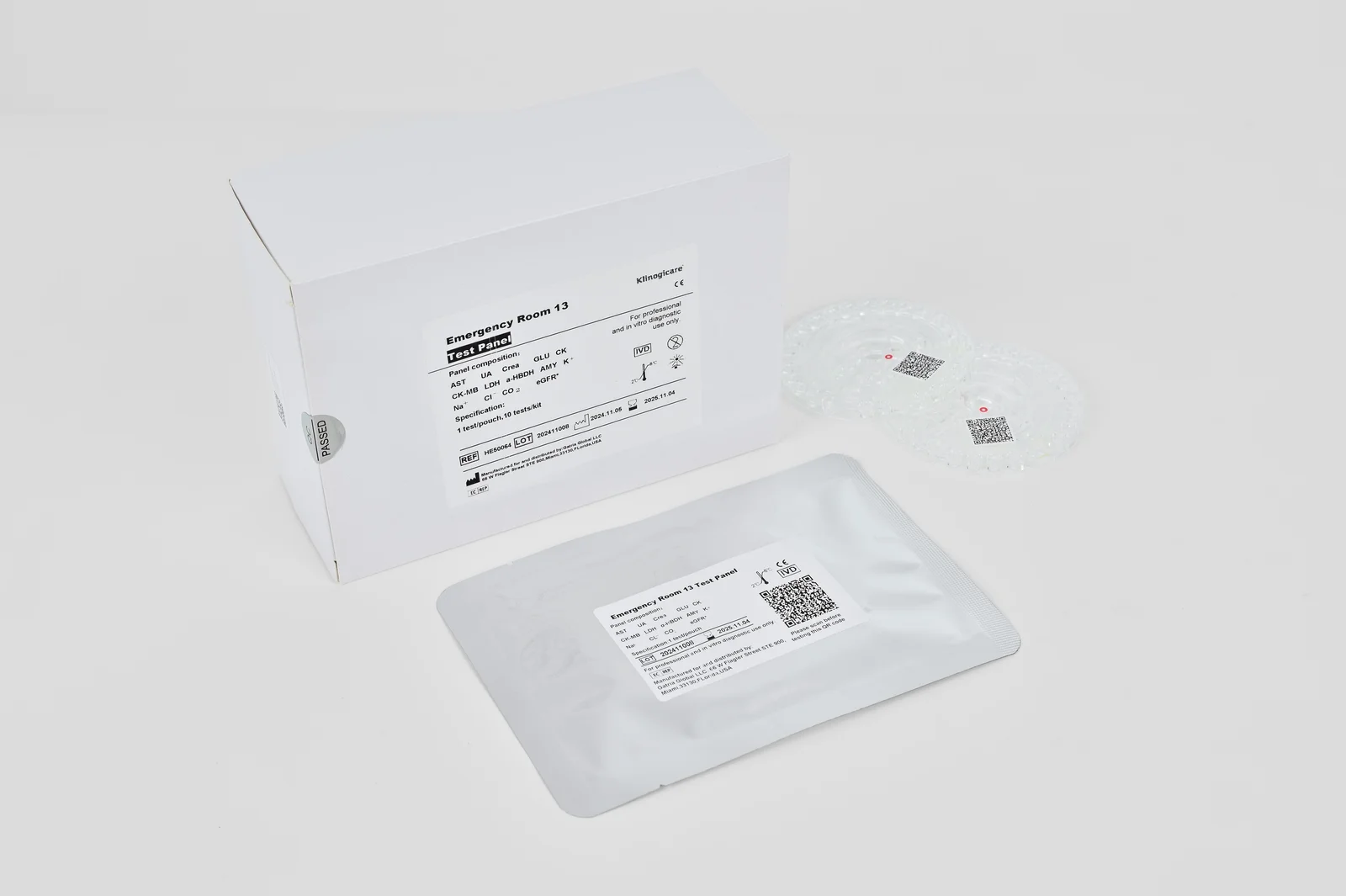
The clinical chemistry side is a one-sample, many-marker instrument. The Klinogicare® StarLab Biochem runs a 9-, 13- or 19-parameter panel from 100 microlitres of whole blood, serum or plasma on a single microfluidic disc in 7–13 minutes. Its clinical emergency panel covers the muscle question and the first kidney question in one run: CK, CK-MB, AST, LDH and α-HBDH for muscle; creatinine and uric acid for the kidney; sodium, potassium, chloride and total CO₂ for fluid balance; glucose and amylase. Urea sits on the general chemistry panels, together with the liver enzymes, proteins and lipids, for the catabolism question and the occasional large screen. The instrument weighs 2.9 kg, is ready in three minutes and prints the result.
Klinogicare® StarLab Biochem with its reagent disc: one 100-microlitre sample, a 9-, 13- or 19-parameter clinical chemistry panel in 7–13 minutes.
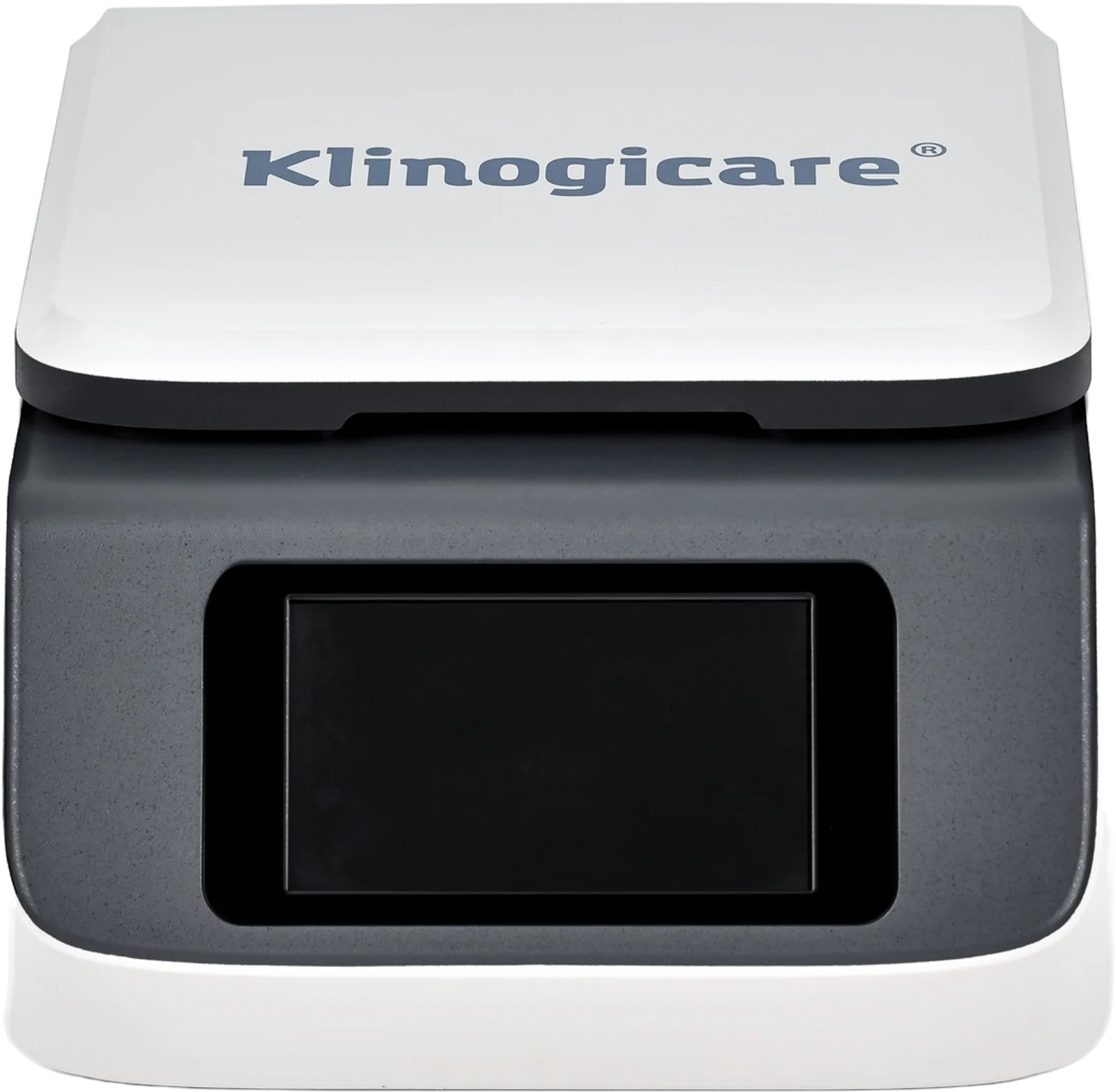
The immunoassay side is a six-sample, one-marker instrument. The Klinogicare® StarLab Hormones & Proteins tests up to six 50-microlitre fingertip or earlobe samples for one selected marker per run, myoglobin, cortisol, high-sensitivity troponin I or troponin T, in about ten minutes on single-use fluorescence discs stored at 2–25 °C. Twenty-four players for one marker take four runs, about 40 minutes of instrument time plus collection and loading. It weighs 4.9 kg and runs in the treatment room or the hotel.
Klinogicare® StarLab Hormones & Proteins: up to six 50-microlitre capillary samples for one marker per run, myoglobin, cortisol or a cardiac troponin, in about ten minutes.
The two instruments divide the week as the markers do. The emergency-panel disc is the MD+1 and MD+2 instrument for the whole squad when CK is the question, and the travel and heat instrument for creatinine and electrolytes, with a general-chemistry disc added when urea is needed; the immunoassay is the morning-after instrument for the players reporting pain, the mid-week cortisol instrument for the players under a hormone programme, and the physician's troponin instrument. The pre-analytical rules of Section 03 become a checklist taped to the case: the same clock time, the same sample site, the athlete seated for the same number of minutes, the disc at room temperature, the result entered against the athlete's baseline before anyone comments on it. Quality control runs on the schedule the manufacturer specifies and is logged, because a drift in the instrument looks exactly like a drift in the squad.
One form can hold both instruments' results, and it must not erase their differences. CK from the chemistry disc and myoglobin from the immunoassay have different kinetics, cortisol depends on the collection conditions, and troponin is a clinical assay; a column headed "recovery markers" that mixes the four destroys the very distinction the two devices make possible. The same discipline applies to the order: a panel run because it is Monday is harder to interpret than one run because a player's recovery is atypical, and the question is written on the form before the disc goes in.
Throughput determines the plan. A 24-player squad with a seven-day microcycle and a CK programme uses 24 chemistry discs on MD+2, plus the players flagged for a repeat on MD+3. A myoglobin programme for the players who report pain uses one immunoassay run of up to six discs on most mornings. A cortisol programme for a block uses one run per six players on the chosen rest morning. The kidney check on arrival from a long trip, or in a heat camp, is an emergency-panel disc per player at risk, plus a general-chemistry disc for those whose urea matters. A team that writes those numbers down before the season orders the right number of kits and never has to choose between the marker and the budget on the morning a player reports pain.
Section 11What the 2023–2026 evidence supports: five rules
The baseline is the measurement. Individualised reference ranges lowered the error of CK-based recovery classification from 64–67% to 19–21% in 161 professional footballers, and adaptive individual ranges outperformed static ranges in a Premier League squad. Three to five rest-day samples per marker, the same clock time, matrix and device, and a z-score or reference change value as the threshold.
The microcycle assigns the marker to the day. Myoglobin on the morning after the match for players reporting pain; CK on MD+1 and MD+2, approaching baseline by MD+3 in some elite cohorts, still elevated in others and in the players with the most accelerations and decelerations; cortisol and urea on a mid-week rest morning against the month; nothing routine on MD−1 or match day.
Congestion is read as a level, not a response. Match-day CK was 309 against 220 U/L with fewer than three recovery days in 188 elite youth national-team players; 120-minute matches and back-to-back games raise and prolong the signal; hamstring rapid force and the muscle transcriptome were still abnormal at 72 hours. The recovery sample moves to MD+1 and the high-demand players are flagged before the number arrives.
Travel and heat put the kidney and hydration into the protocol. After running in the heat, serum sodium and osmolality detected 2% dehydration with areas under the curve of 0.87 and 0.91 where urine indices and thirst were limited; team-sport athletes were still hypohydrated 20 hours after a session; heat-associated rhabdomyolysis presented with lower CK; in the Oslo cohort, creatinine at admission and the myoglobin-to-CK ratio identified kidney risk.
The decision is a process with named owners. The physician owns the red flags, troponin and return to play; the physiologist owns baselines and integration; the coaches receive traffic lights; no single value decides; blood and questionnaire are read together; the rules are written before the season.
The rule behind the five is short: the smallest test that answers the next real question is the right test. A team earns that simplicity by building the baseline, keeping the clock and the method constant, documenting the load, and assigning every result to the person who can act on it.
Section 12Questions teams ask about a biochemical workflow
How many samples make a baseline, and how often do we rebuild it?
Three to five rest-day samples per marker, taken in pre-season or in the first non-congested weeks at the same clock time, give a mean and a spread to compare against. The awakening cortisol response varied substantially between consecutive mornings in elite rugby players, and CK has a non-normal distribution with large individual variability, so one sample is a point, not a baseline. The baseline is rebuilt after a long injury, after the off-season, and whenever the sampling site, the instrument or the time of day changes, because a change in any of those looks like a change in the athlete.
Which day of the week should we take blood, and from how many players?
For CK, the second day after the match in a normal week and the first day in a congested one, from the whole squad or from the players who played more than 60 minutes. For myoglobin, the morning after the match from the players who report muscle pain, because a value above about 60 ng/mL carried 32-fold higher odds of a confirmed strain. For cortisol, a fixed waking-time sample on a mid-week rest morning from the players in a hormone programme, read against the month. Nothing routine on the day before a match or on match day, when a cortisol sample reflects anticipation and a CK sample adds nothing to the week's data.
Can a high CK tell us who will get injured next week?
No. Across 1,656 player-matches and 229 muscle injuries in professional footballers, CK on the second post-match day was higher before injuries but had a sensitivity of 56%, a specificity of 55% and an area under the curve of 0.557. CK tells the staff how far the player is from his own post-match pattern and whether the schedule is accumulating; it does not forecast an injury, and a normal value does not clear a player on its own. The decision to modify a session comes from the trend against the player's own baseline, read with the GPS load and the wellness questionnaire, not from a single number.
What do we test on an away trip or in a tournament?
The two tests that fit a hotel room and a fingertip: a CK on the morning after each match, read against the player's own post-match distribution, and a myoglobin for the players who report pain. After a long flight or in heat, the kidney and hydration panel is added, creatinine, urea, sodium and potassium: after running in the heat, serum sodium identified dehydration where urine indices and thirst were limited, and heat-associated rhabdomyolysis presents with lower CK than the textbook number. After a flight, the values are read with body mass and against the player's own previous results. Travel-week cortisol is recorded with the trip as a confounder and compared with the player's previous trips, not with the home baseline.
If jump and sprint are back to normal, why look at blood?
Because the domains recover at different speeds. In 22 elite footballers after a standardised match, jump and sprint had recovered by 48 hours while CK, LDH, myoglobin and soreness were still above baseline, and in 19 footballers the hamstring's rapid force production was still unrecovered at 72 hours when maximal strength had returned. Normal function shows what the player can do in the next session; the blood shows whether the muscle is still carrying the last one. Neither answers the question alone: read together with the examination, they tell the staff which player can take the eccentric block and which one takes it two days later.
References
Method note. PubMed was searched on 4 November 2026 with twelve queries covering athlete monitoring frameworks, microcycle and congested-schedule biochemistry, individualised reference ranges and biological variation, hydration and electrolytes, point-of-care testing, return to play and muscle injury, overreaching and energy availability, travel and heat, muscle enzymes and urea, staff decision-making, machine-learning prediction and consensus statements, each combined with athlete and team-sport terms and limited to human studies with publication dates 2023–2026 (1,209 unique records). Studies cited in our May and November 2026 articles were re-used where they carry the data; public sources were located by web search and checked against the original pages. All DOIs and PubMed records were verified on 4 November 2026.
Scientific sources (peer-reviewed, 2023–2026)
Rebelo A, Bishop C, Thorpe RT, et al.Monitoring training effects in athletes: a multidimensional framework for decision-making.Sports Medicine. 2026.DOI 10.1007/s40279-026-02417-4 · PubMed 41824225
Mănescu DC, Plăstoi CD, Pîrvan A, et al.Biomarkers as temporal signals: a decision-linked multi-layer framework for exercise recovery, overload, and adaptation.International Journal of Molecular Sciences. 2026.DOI 10.3390/ijms27083675 · PubMed 42074313
Mănescu DC, Voinea A, Plastoi CD, et al.Molecular biomarkers of training responses: a systems framework for exercise adaptation and athlete monitoring.International Journal of Molecular Sciences. 2026.DOI 10.3390/ijms27083601 · PubMed 42074239
Haller N, Behringer M, Reichel T, et al.Blood-based biomarkers for managing workload in athletes: considerations and recommendations for evidence-based use of established biomarkers.Sports Medicine. 2023.DOI 10.1007/s40279-023-01836-x · PubMed 37204619
Haller N, Reichel T, Zimmer P, et al.Blood-based biomarkers for managing workload in athletes: perspectives for research on emerging biomarkers.Sports Medicine. 2023.DOI 10.1007/s40279-023-01866-5 · PubMed 37341908
Muñoz-López M, Quesada-Fernández G, Sancho-Haro ES, et al.From routine blood tests to metabolomics: a contextual framework for interpreting biomarkers of training load, recovery, and metabolic stress in athletes.Metabolites. 2026.DOI 10.3390/metabo16070483 · PubMed 42506435
Haller N, Stanin T, Strepp T, et al.On the relationship between external and internal load variables in elite youth soccer players.Scientific Reports. 2026.DOI 10.1038/s41598-025-31487-z · PubMed 41571727
Dai X, Yan J, Bi X, et al.Weekly fluctuations in subjective and objective measures of internal training load and their relationships in male elite rowers.Journal of Sports Science and Medicine. 2025.DOI 10.52082/jssm.2025.269 · PubMed 40469869
Beumer Prieto B, Moreno-Parro I, Sufrate-Vergara B, et al.Biological variation of cardiac biomarkers in athletes during an entire sport season.Clinical Chemistry and Laboratory Medicine. 2025.DOI 10.1515/cclm-2024-1203 · PubMed 39865503
Moreno-Parro I, Diaz-Garzon J, Aarsand AK, et al.Biological variation data in triathletes for metabolism and growth-related biomarkers included in the Athlete Biological Passport.Clinical Chemistry. 2024.DOI 10.1093/clinchem/hvae072 · PubMed 38781424
Radišić Biljak V, Lazić A, Nikler A, et al.Post-exercise creatine kinase variability: a literature review.Biochemia Medica. 2025.DOI 10.11613/BM.2025.020502 · PubMed 40520657
Mei T, Li Y, Bao D, et al.Genome-wide association study of genetic variants influencing creatine kinase levels in Chinese winter sports athletes.Gene. 2026.DOI 10.1016/j.gene.2026.150275 · PubMed 42314779
Skorski S, Pitsch W, Barth V, et al.Individualised reference ranges for markers of muscle recovery assessment in soccer.European Journal of Sport Science. 2023.DOI 10.1080/17461391.2022.2134052 · PubMed 36226544
Daniels D, Roshan D, Lewis NA, et al.Early warning system for player recovery?A series of case studies illustrating the application of individualised adaptive reference ranges in the longitudinal blood monitoring of English Premier League soccer players. Biomarkers. 2025.DOI 10.1080/1354750X.2025.2473724 · PubMed 40013720
Crewther BT, Serpell BG, Obmiński Z, et al.Positive day-to-day relationships between the cortisol and testosterone awakening responses in elite male athletes.Biology of Sport. 2025.DOI 10.5114/biolsport.2025.148541 · PubMed 41048230
Arslan FD, Hoffmann G.Use of indirect methods and machine learning algorithms for the estimation of reference intervals, taking cortisol measurements as an example.Clinical Chemistry and Laboratory Medicine. 2026.DOI 10.1515/cclm-2025-0984 · PubMed 41118607
Reichel T, Held S, Schwarz A, et al.Acute response of biomarkers in plasma from capillary blood after a strenuous endurance exercise bout.European Journal of Applied Physiology. 2023.DOI 10.1007/s00421-022-05068-1 · PubMed 36227377
Beato M, Madsen EE, Clubb J, et al.Monitoring readiness to train and perform in female football: current evidence and recommendations for practitioners.International Journal of Sports Physiology and Performance. 2024.DOI 10.1123/ijspp.2023-0405 · PubMed 38307011
Dupont A.The role of clinical laboratory testing in athlete monitoring: health, performance, and prevention of overtraining.Annales de Biologie Clinique. 2026.DOI 10.1684/abc.2026.2053 · PubMed 42765120
Saita Y, Hattori K, Hokari A, et al.Plasma myoglobin indicates muscle damage associated with acceleration/deceleration during football.Journal of Sports Medicine and Physical Fitness. 2023.DOI 10.23736/S0022-4707.23.15203-0 · PubMed 37712927
Saita Y, Yamamoto N, Fukushima Y, et al.Detecting muscle strain in professional football players through plasma myoglobin levels.Journal of Sports Medicine and Physical Fitness. 2025.DOI 10.23736/S0022-4707.25.16517-1 · PubMed 40742786
Du L, Xiao J, Li C, et al.Acute capillary plasma biomarker, neuromuscular, and perceptual responses to standardised soccer match play in elite players: a descriptive study of asynchronous multi-domain recovery.Metabolites. 2026.DOI 10.3390/metabo16060370 · PubMed 42346350
Tamujo AC, Flores HN, Cetolin T, et al.Creatine kinase concentration on the second post-match day is not associated with risk of subsequent muscle injury in professional football players: a four-season cohort study.The Physician and Sportsmedicine. 2024.DOI 10.1080/00913847.2023.2246175 · PubMed 37548364
Schuth G, Szigeti G, Dobreff G, et al.Are three recovery days enough?Elevated match day creatine kinase levels under congested schedules in youth soccer. Biology of Sport. 2026.DOI 10.5114/biolsport.2026.157992 · PubMed 42422396
Garcia-Unanue J, Hernandez-Martin A, Viejo-Romero D, et al.The impact of a congested match schedule (due to the COVID-19 lockdown) on creatine kinase (CK) in elite football players using GPS tracking technology.Sensors. 2024.DOI 10.3390/s24216917 · PubMed 39517814
Cosio PL, Moreno-Simonet L, Fernández D, et al.Football (soccer) match-derived hamstring muscles residual fatigue can be monitored using early rate of torque development.European Journal of Applied Physiology. 2025.DOI 10.1007/s00421-024-05694-x · PubMed 39725689
Cosio PL, Pinal-Fernandez I, Moreno-Simonet L, et al.Transcriptomic profiling of the biceps femoris long head 72 h following a football match and associations with recovery biomarkers.Scandinavian Journal of Medicine & Science in Sports. 2026.DOI 10.1111/sms.70339 · PubMed 42455516
Curzi D, Amatori S, Silvestri F, et al.Professional football training and recovery: a longitudinal study on the effects of weekly conditioning session and workload variables.PLoS One. 2024.DOI 10.1371/journal.pone.0310036 · PubMed 39255308
Jiménez M, Lopez-Lluch G, Barón-López FJ, et al.The cortisol awakening response (CAR) of elite athletes is elevated before a competition, but no interaction with sport type.Psychoneuroendocrinology. 2026.DOI 10.1016/j.psyneuen.2026.107905 · PubMed 42208408
Henze AS, Matits L, Huth J, et al.Relationship between objective and subjective markers of muscle recovery in professional handball players.International Journal of Sports Physiology and Performance. 2024.DOI 10.1123/ijspp.2023-0482 · PubMed 38266635
Zhu D.Scoring and possession small-sided games elicit distinct 48-hour muscle damage and neuromuscular responses in basketball athletes.Journal of Sports Science and Medicine. 2026.DOI 10.52082/jssm.2026.221 · PubMed 41710436
Bernatík D, Hulka K, Izakova A, et al.Acute post-match fatigue and recovery kinetics of neuromuscular performance and muscle damage after a friendly match in elite youth football players.Journal of Functional Morphology and Kinesiology. 2026.DOI 10.3390/jfmk11030353 · PubMed 42783647
Oliveira-de-Souza D, Gomes DV, Spineti J, et al.Systemic degree of perturbation of plasma markers reveals cumulative biological stress across the competitive season in professional soccer players.Sports Medicine. 2026.DOI 10.1007/s40279-026-02470-z · PubMed 42329304
Field A, Corr LD, Sarmento H, et al.The impact of 120 minutes of soccer-specific exercise on recovery.Research Quarterly for Exercise and Sport. 2023.DOI 10.1080/02701367.2021.1964697 · PubMed 35344470
Ermidis G, Mohr M, Jamurtas AZ, et al.Recovery during successive 120-min football games: results from the 120-min placebo/carbohydrate randomized controlled trial.Medicine and Science in Sports and Exercise. 2024.DOI 10.1249/MSS.0000000000003398 · PubMed 38306312
Pantazis D, Avloniti A, Dimitrios D, et al.The effect of protein supplementation and playing time on recovery kinetics during a congested basketball schedule.Nutrients. 2024.DOI 10.3390/nu17010128 · PubMed 39796561
Veen J, Bergh C, Cao Y, et al.The impact of cold-water immersion on post-match recovery in trained soccer players: a systematic review and meta-analysis.Scandinavian Journal of Medicine & Science in Sports. 2026.DOI 10.1111/sms.70202 · PubMed 41490103
Liu J, Li Q, Han Y, et al.Efficacy of post-exercise recovery strategies for elite soccer players: a network meta-analysis.Frontiers in Physiology. 2026.DOI 10.3389/fphys.2026.1760392 · PubMed 41647155
Benito A, Boppre G, Lopes A, et al.Do long-haul travel and jet lag affect athletes' physiological, humoral and performance outcomes?A systematic narrative review. Sports. 2026.DOI 10.3390/sports14030093 · PubMed 41893584
Gotshalk LA, Gallagher A, Williams H, et al.Travel-related changes in physiological health markers: the effects of transmeridian travel on female volleyball players.International Journal of Exercise Science. 2026.DOI 10.70252/IJES2026206 · PubMed 42499394
Stergiopoulos DC, Botonis PG, Miliotis PG, et al.Effects of simulated short-haul flights on sport-specific performance, sleep, and psychophysiological responses in football players.Scandinavian Journal of Medicine & Science in Sports. 2025.DOI 10.1111/sms.70169 · PubMed 41251037
Botonis PG, Toubekis AG.Intensified Olympic preparation: sleep and training-related hormonal and immune responses in water polo.International Journal of Sports Physiology and Performance. 2023.DOI 10.1123/ijspp.2022-0079 · PubMed 36640772
Salazar-Monge H, Valdez-Velazquez LL, Gaitan-Hinojosa MA, et al.Acute biochemical and physiological responses to prolonged road cycling in competitive youth athletes: a cross-sectional study.Journal of Sports Medicine and Physical Fitness. 2026.DOI 10.23736/S0022-4707.26.17553-7 · PubMed 41859838
Francisco R, Jesus F, Di Vincenzo O, et al.Assessment of exercise-induced dehydration in underhydrated athletes: which method shows the most promise?Clinical Nutrition. 2024.DOI 10.1016/j.clnu.2024.08.003 · PubMed 39137516
Funnell MP, Juett LA, Ferrara R, et al.Ad-libitum fluid intake was insufficient to achieve euhydration 20 h after intermittent running in male team sports athletes.Physiology and Behavior. 2023.DOI 10.1016/j.physbeh.2023.114227 · PubMed 37156317
Keefe MS, Luk HY, Rolloque JS, et al.The weight, urine colour and thirst Venn diagram is an accurate tool compared with urinary and blood markers for hydration assessment at morning and afternoon timepoints in euhydrated and free-living individuals.British Journal of Nutrition. 2024.DOI 10.1017/S000711452300274X · PubMed 38012859
Oh RC, Bury DC, McClure CJ, et al.Exertional rhabdomyolysis: an analysis of 321 hospitalised US military service members and its relationship with heat illness.BMJ Military Health. 2024.DOI 10.1136/military-2021-002028 · PubMed 36442890
Goodwin KC, Giersch GEW, Murray TA, et al.Sex differences in biomarkers of end-organ damage following exertional heat stroke in humans.Journal of Applied Physiology. 2024.DOI 10.1152/japplphysiol.00463.2024 · PubMed 39298615
Vangstad M, Kro Birkeland JA, Gulsvik AK, et al.Exertional rhabdomyolysis: clinical features, management, complications and prediction of acute kidney injury.BMJ Open Sport & Exercise Medicine. 2026.DOI 10.1136/bmjsem-2026-003214 · PubMed 41788978
AlHumaidan HM, Alrubaysh MA, Hakeem AA, et al.From the field to the emergency room: a systematic case-level review of exertional rhabdomyolysis and acute kidney injury in athletes.Cureus. 2026.DOI 10.7759/cureus.111662 · PubMed 42524330
Dantas GHM, de Alkmim Moreira Nunes R, Casimiro-Lopes G, et al.Analysis of physiological markers and risk factors for the development of rhabdomyolysis in military personnel: a systematic review.Reviews on Environmental Health. 2023.DOI 10.1515/reveh-2022-0038 · PubMed 35852130
Verdan C, Ghasemishahrestani Z, Xavier MDDS, et al.Acute kidney injury induced by exertional rhabdomyolysis in military personnel.Journal of Nephrology. 2026.DOI 10.1093/joneph/aajaf030 · PubMed 42345300
Stekelenburg JO, Berge K, Janssen SLJE, et al.Prevalence and predictors of cardiac troponin elevations following exercise: a systematic review, meta-analysis, and meta-regression.European Journal of Preventive Cardiology. 2026.DOI 10.1093/eurjpc/zwag218 · PubMed 41985028
Schindler MJ, Schoenfeld J, Trommler A, et al.Long-term changes in ventricular function in recreational marathon runners.JAMA Cardiology. 2026.DOI 10.1001/jamacardio.2025.4456 · PubMed 41370052
Hammerer-Lercher A, Kissel CK, Wittfooth S, et al.False-positive cardiac troponin I values due to macrotroponin in healthy athletes after COVID-19.Clinical Chemistry and Laboratory Medicine. 2025.DOI 10.1515/cclm-2025-0427 · PubMed 40853145
Popelier C, Koppens K, L'Hoyes W, et al.False-positive troponin in a professional cyclist: a case report on avoiding misdiagnosis and unnecessary restrictions.European Heart Journal Case Reports. 2026.DOI 10.1093/ehjcr/ytag192 · PubMed 41883593
Dean JL, Leggit JC, Franzos MA, et al.Clinical interpretation of cardiac troponin in athletes: from endurance exercise to exertional injury.PM&R. 2026.DOI 10.1002/pmrj.70203 · PubMed 42635296
Hull JH, Schwellnus M, Valtonen M, et al.Point-of-care testing to detect respiratory infections in athletes: what is the role?British Journal of Sports Medicine. 2024.DOI 10.1136/bjsports-2024-108539 · PubMed 39054046
Guisado-Cuadrado I, Recacha-Ponce P, Peinado AB, et al.Biochemical responses to experimentally induced short-term low energy availability in athletes: a systematic review.Scandinavian Journal of Medicine & Science in Sports. 2026.DOI 10.1111/sms.70249 · PubMed 41794545
Schuth G, Szigeti G, Dobreff G, et al.Football movement profile-based creatine-kinase prediction performs similarly to Global Positioning System-derived machine learning models in national-team soccer players.International Journal of Sports Physiology and Performance. 2024.DOI 10.1123/ijspp.2024-0077 · PubMed 38917990
Drole K, Doupona M, Steffen K, et al.Associations between subjective and objective measures of stress and load: an insight from 45-week prospective study in 189 elite athletes.Frontiers in Psychology. 2024.DOI 10.3389/fpsyg.2024.1521290 · PubMed 39906197
Ostapiuk-Karolczuk J, Dziewiecka H, Bojsa P, et al.Biochemical and psychological markers of fatigue and recovery in mixed martial arts athletes during strength and conditioning training.Scientific Reports. 2025.DOI 10.1038/s41598-025-09719-z · PubMed 40624253
Ponzetto F, Franceschi A, Leoni L, et al.Acute effects of different training sessions on the extended blood steroid profile in elite male football players.Sports Medicine. 2026.DOI 10.1007/s40279-026-02467-8 · PubMed 42230415
Earlier work cited in the prologue
Klinogicare® Research.Myoglobin, cortisol and cardiac troponin in professional sport: what 2023–2026 research says about the hours after the load, the weeks of the season and the heart.Klinogicare® Publications, 3 November 2026.Read
Klinogicare® Research.Creatine kinase in football and team sports: what 2025–2026 research says about muscle load, recovery and injury risk.Klinogicare® Publications, 3 November 2026.Read
Klinogicare® Research.Objective assessment of athlete readiness: biomarkers for load monitoring and injury-risk reduction.Klinogicare® Publications, 20 May 2026.Read
Public sources (federations, clubs, surveillance, media)
FIFA.Professional Players Consultation Forum meets in Rabat.Media release, 9 November 2025.Source
FIFPRO.Player Workload Monitoring 2024/25: Men's Football Report.2025.Source
Austin S.How top clubs are leveraging blood data.Training Ground Guru, 11 December 2025.Source
Alrefai A.Point of care testing in elite football: bringing the lab to the athlete.POCTIFY, 15 July 2026.Source
Armed Forces Health Surveillance Division.Exertional rhabdomyolysis among U.S.active component service members, 2021–2025. MSMR. 2026.Source
Cite this article
Klinogicare® Research (2026). One biochemical workflow for a professional team: which marker on which day of the microcycle, on the road and in a tournament, who reads the result and how the load decision is made. Klinogicare® Publications, 4 November 2026. https://klinogicare.us/biochemical-monitoring-workflow-team-sport-2026/